A big pothole hit can leave you unsure what to trust. The car may still drive, but something can be bent or loosened just enough to cause trouble later. What makes it tricky is that some damage shows up immediately as vibration or pulling, while other damage shows up days later as uneven tire wear or a slow leak.
These quick checks help you decide whether it is safe to keep driving or whether you should stop and get it checked.
What To Do In The First Minute After The Hit
Right after a hard impact, your priority is control and safety. Slow down, keep a firm grip on the wheel, and avoid sudden lane changes. If the steering suddenly feels heavy, the car pulls hard, or you hear continuous scraping, get to a safe place to pull over.
Once you are stopped somewhere safe, take a breath and look for obvious issues. A tire can lose air quickly after a pothole hit, and driving on low pressure is what turns a minor tire problem into a ruined tire and possibly a damaged wheel.
Check Tire Pressure And Look For A Sidewall Bubble
The fastest safety check is the tire itself. Look at the sidewall for a bubble or bulge, since that usually means internal damage. If you see a bubble, do not keep driving on that tire.
If you have a tire pressure display, compare the numbers side to side on the same axle. If one tire is dropping, put air in it if you can and plan for inspection right away. If pressure drops again quickly, treat it as a leak that needs repair, not a tire that is just picky about temperature.
Look For A Bent Wheel Lip Or New Scrape Marks
Wheels often bend at the outer lip from pothole impacts. A small bend may not be obvious until you look closely along the rim edge. Fresh scrapes or shiny marks can be clues that the wheel took the hit.
A bent wheel can cause vibration, can make balancing difficult, and create slow leaks where the tire seals. If the steering wheel now shakes at a certain speed range, the wheel and tire are the first place to focus. Driving on a bent wheel is usually not an immediate emergency, but it is not something you want to ignore for weeks.
Pay Attention To Steering Pull Or Off-Center Wheel
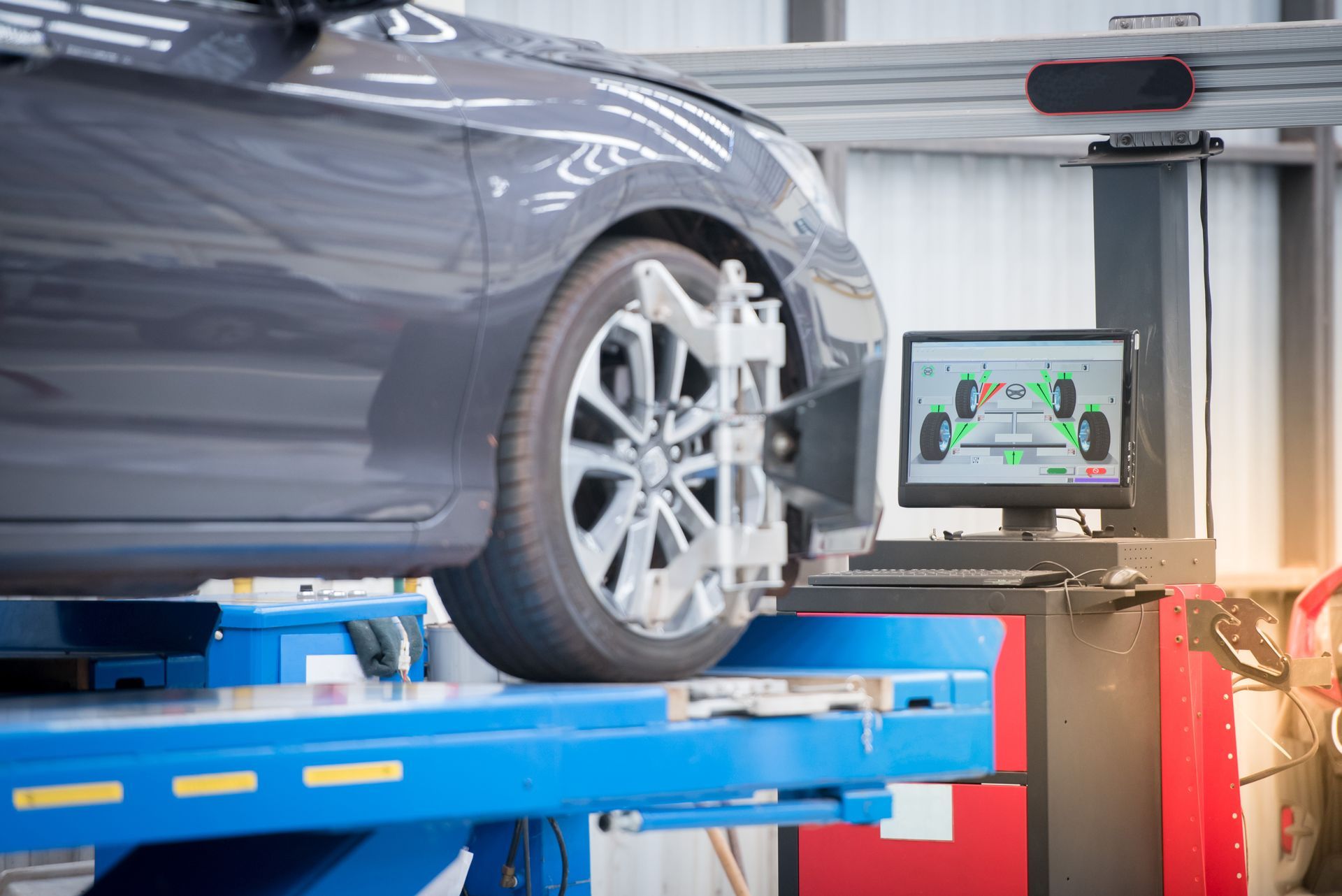
If the car now pulls left or right on a flat road, alignment may have shifted. Also check whether the steering wheel sits off-center when you are driving straight. Those are common after a pothole hit, even when nothing looks visibly bent.
A small alignment shift can start uneven tire wear quickly. If you keep driving on it, the cost often shows up as tires wear prematurely. If the pull is strong or sudden, or the car feels twitchy at speed, it is safer to have it checked before more highway driving.
Listen For Clunks Or Rattles Over Bumps
A new clunk over bumps can mean something loosened or a part took a hit. Sway bar links, strut mounts, control arm bushings, and ball joints are common wear points that can show symptoms after a hard impact. A rattle that appears only on rough pavement is still meaningful if it started right after the pothole.
If the noise is sharp and repeatable, do not assume it will go away. It usually means something changed mechanically. The earlier you catch it, the more likely it is to be a simple fix rather than a cascade of worn parts.
Test Braking Feel And Watch For Pulling
Brake issues from potholes are less common, but they can happen if a wheel is bent or if a suspension component shifts. If the steering wheel shakes only while braking, the pothole may have triggered a problem that is now showing up under brake load. If the car pulls while braking, that can point to a caliper issue or a suspension alignment change.
Do a gentle brake test on a quiet road. You are not trying to see how hard it can stop. You are checking whether braking feels straight, smooth, and consistent.
Look Under The Car For Hanging Panels Or Fluid Leaks
Potholes can rip or crack splash shields and underbody panels. A loose panel can drag, make noise, and pull on wiring or hoses. If you hear scraping that changes with speed, a panel may be contacting the road.
Also look for fresh fluid spots after you park. A pothole impact can damage an oil pan, a transmission pan, or a radiator area on some vehicles. If you see a new puddle, do not keep driving until you know what it is.
Watch For A Vibration That Builds With Speed
A pothole vibration usually shows up in a specific speed range, often between 50 and 70 mph. If it is mild but new, it still deserves attention because it often points to wheel damage or tire internal damage. If the vibration is strong, avoid highway speeds and get it checked sooner.
If the vibration is in the steering wheel, suspect front tire or wheel issues first. If it is felt more in the seat, it may be a rear wheel issue. Either way, the cause is usually traceable with a proper inspection.
When It Is Not Safe To Keep Driving
If a tire is losing air quickly, if you see a bubble, or if the steering feels unstable, stop driving and get help. Also stop if the car is pulling hard, making grinding noises, or if the steering wheel shakes violently at speed. Those are signs that the vehicle is not stable, or the tire is unsafe.
Even if it seems drivable, a quick inspection is still smart after a big hit. It can save tires, prevent uneven wear, and catch a bent part before it becomes a bigger issue. Regular maintenance, like rotations and alignment checks, also helps because it gives you a baseline to notice changes.
Get Pothole Damage Inspection In Broomfield, CO, With Rocky Mountain Car Care
If you hit a big pothole and your car now pulls, vibrates, or makes new noises, Rocky Mountain Car Care in Broomfield, CO, can check the tires, wheels, alignment, and suspension points that take the hit. We will pinpoint what changed, show you what is safe to drive on, and help you prevent the kind of uneven tire wear that costs money later.
Book a visit and get peace of mind before your next highway drive.